Use the scene reference for composition and your product reference for packaging. Check branding, proportions, hand contact, hair texture and lighting before approving an image.
Beauty and haircare AI product photography prompts need more than a description of a bottle and a beautiful background. A convincing image depends on how the product is held, how light falls across the label, and how skin, hair, water and cream behave around the packaging.
This guide brings together nine complete reference-based prompts by Digital Arnab, with a matching visual for every direction. Explore expressive portraits, direct-flash bathroom scenes, wet-hair close-ups, a cream pour and warm product still lifes. Each prompt separates the scene reference from your own product reference so you can adapt the direction without deliberately redesigning your packaging.
The images illustrate the visual directions. The aspect ratio listed with each prompt is the requested generation format; the displayed example may use a different crop.
How to use these product replacement prompts
1. Prepare the scene and product references
Upload the matching scene as Image 1 and a clear photograph of your replacement product as Image 2. Use a product image with unobstructed branding, visible packaging edges and the correct cap or dispenser. For the green-carpet scene, add separate companion product references only if you want a full range in the frame.
2. Copy the full prompt and set the aspect ratio
Choose an image-generation or editing tool that accepts reference images. Keep the reference order consistent, paste the complete prompt and select its requested aspect ratio. If your tool names references differently, replace “Image 1” and “Image 2” with those reference names. Some prompts mention the packaging from an earlier composition reference; the replacement product must follow your own Image 2.
3. Review the result before refining it
Compare the generated packaging with your uploaded product. Inspect label spelling, proportions, closure, finger anatomy and contact shadows at full size. The prompt asks for accurate reproduction, but the output still needs checking. Revise the specific defect while keeping the approved composition, lighting and product reference unchanged.
1. Curly hair portrait with raised product
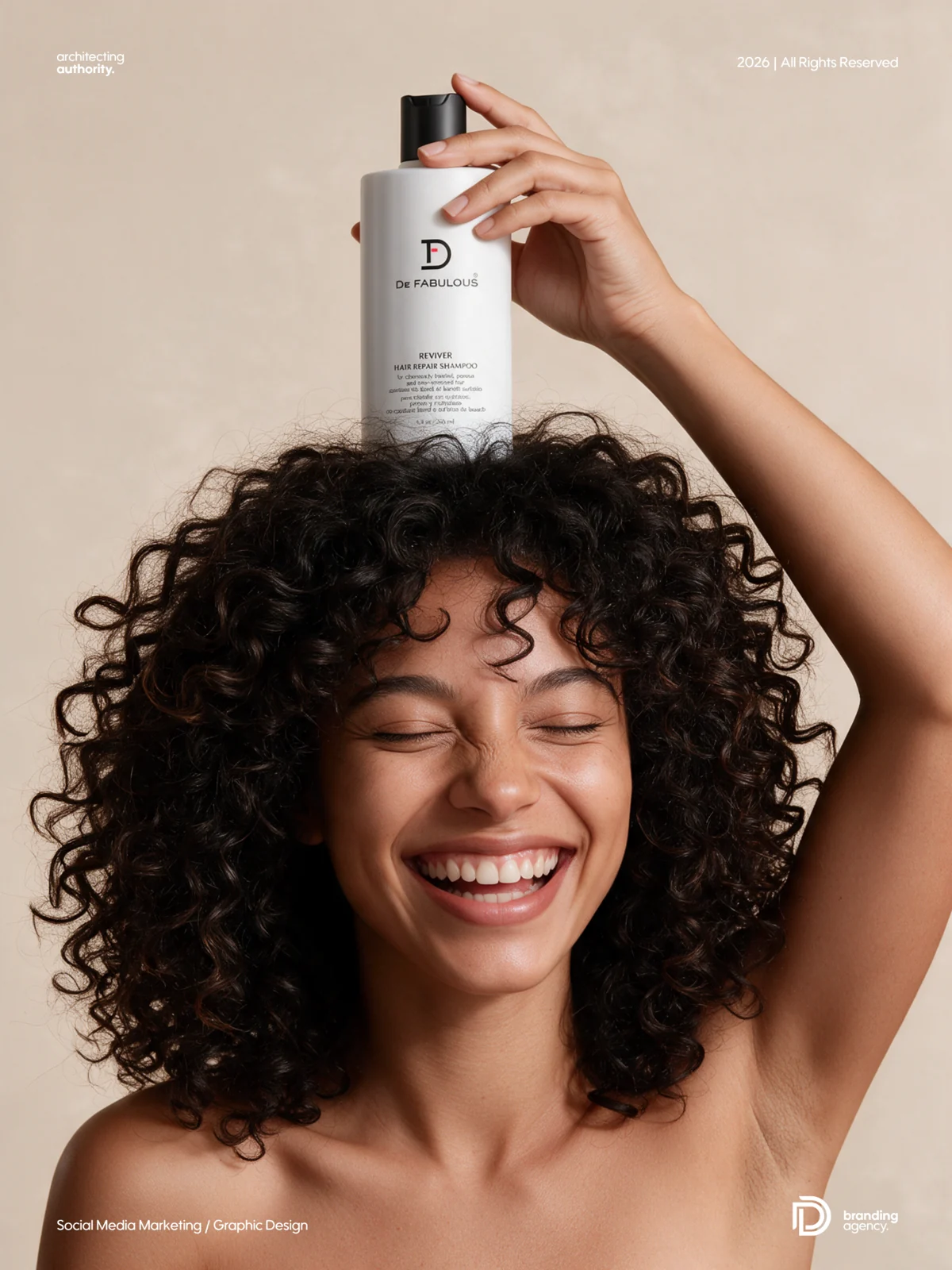
Build an expressive haircare hero image around a joyful face, dense curls and a clearly visible product. The important details are the hand grip, natural curl separation and the contact between fingers and packaging.
Output aspect ratio: 1:1 · References: Image 1 for the scene; Image 2 for your product.
Copy the complete prompt below, including the final exclusions:
Create a photorealistic beauty campaign photograph using Image 1 as the reference for the model, composition, pose, expression, hair, skin texture, lighting, and hand placement. Replace the original product with the exact product from Image 2.
Maintain the square 1:1 composition, close upper-body crop, straight-on camera angle, and warm beige studio background. Keep the model’s face slightly below the center, with voluminous curls surrounding it and the product positioned upright directly above her crown. Preserve the raised arm on the right side of the image, the outward-pointing bent elbow, and the forearm extending diagonally toward the product.
Preserve the model’s facial identity, warm medium-brown skin tone, face shape, nose, eyebrows, and lips. Match her joyful expression precisely: eyes gently closed, cheeks lifted, nose slightly scrunched, and a broad open smile revealing naturally shaped teeth. Retain the subtle smile lines and creases around the closed eyelids. The expression should feel spontaneous and believable.
Reproduce the dense, dark-brown curly hair with subtle warm highlights: tight defined ringlets, irregular curl sizes, natural frizz, fine flyaway strands, individual hairs, and realistic depth between curls. Keep the same hair volume, silhouette, and curls falling across the forehead and around both shoulders.
Maintain authentic skin texture across the face, neck, shoulder, underarm, forearm, and hand: visible pores, fine facial hair, subtle tonal variation, soft natural sheen, knuckle folds, and realistic palm-side finger creases. Avoid smoothing or exaggerated sharpening.
Match the reference grip closely. The hand comes from above and the right, with fingers gently curved around the upper and side surfaces of the product. Preserve the wrist angle, finger spacing, overlapping fingers, natural joint bends, and short nude-colored nails. Adapt the grip only as necessary to fit the replacement product’s actual shape. Maintain anatomically correct fingers, believable contact pressure, and small contact shadows; fingers must never merge with or pass through the packaging.
Reproduce the replacement product’s exact shape, proportions, cap or dispenser, material, colors, logo, label typography, and artwork. Do not transfer the original bottle’s pump or orange packaging onto the replacement. Keep the main branding facing the camera and clearly readable, with fingers avoiding essential label text.
Use soft directional studio lighting from the upper front-left, gentle shadows, natural skin highlights, and realistic packaging reflections. Keep the face, hand, curls, and product sharply detailed against the softly rendered background.
No extra fingers, distorted wrists, duplicated teeth, plastic skin, artificial hair, floating product, warped packaging, altered branding, added text, or watermarks.
2. Playful portrait with product balanced on head
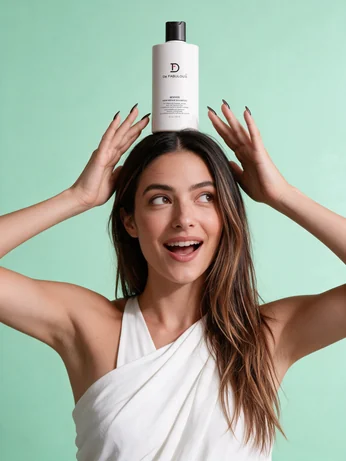
Use the mint background and playful expression for a lighter campaign direction. Keep the hands separate from the bottle and check that its base rests convincingly on the hair.
Output aspect ratio: 3:4 · References: Image 1 for the scene; Image 2 for your product.
Copy the complete prompt below, including the final exclusions:
Create a photorealistic beauty campaign portrait matching Image 1, replacing the container balanced on the model’s head with my product from Image 2. Preserve the reference’s camera angle, framing, body pose, facial expression, hair, hands, and lighting. Vertical 3:4 composition.
Match the upper-body framing: the model centered against a pastel mint-green studio background, both arms extended outward with elbows bent, and both hands raised beside her head. Keep generous space above the product. Preserve her white draped top with its asymmetric folds and realistic fabric texture.
Recreate the playful, surprised expression precisely: head slightly turned toward the viewer’s right, eyes glancing upward toward the right, eyebrows gently lifted, and mouth open in a delighted smile with naturally visible upper teeth. Preserve her facial proportions, nose shape, lip contours, cheekbones, eye shape, and natural facial asymmetry. Avoid exaggerating the expression.
Maintain her warm light-to-medium skin tone and realistic skin texture. Show fine pores, subtle peach fuzz, natural under-eye texture, delicate smile creases, realistic lip lines, and small variations in skin color. Preserve soft highlights on the forehead, cheekbones, nose, shoulders, and arms without making the skin oily or plastic. Keep the polished makeup, defined brows, warm blush, and muted rosy lips seen in the reference.
Match the long, mostly straight brown hair with dark roots and caramel highlights, a near-center part, slight natural bends, and fine flyaway strands. Keep one side tucked behind the visible ear and most of the highlighted lengths falling over the shoulder on the viewer’s right. Retain individual strands and the slight compression where the product rests on the crown.
Preserve both hand poses exactly. The hands hover beside the head without gripping the product, palms angled inward, wrists naturally bent, and fingers separated with relaxed, uneven curves.
Match the long almond-shaped dark nails, finger lengths, joint positions, knuckle creases, and realistic hand texture. Keep the original spacing between the fingertips, hair, and product. Do not add contact between the hands and packaging.
Balance my product directly on top of the model’s head, with a subtle clockwise tilt matching the reference. Preserve the replacement product’s actual shape, proportions, closure, colors, materials, logo, typography, and label artwork. Keep its front branding facing the camera and clearly readable.
Scale the entire product proportionally to fit the composition; do not stretch it or reshape it into the original jar. Add convincing contact shadows and slight hair compression beneath its base.
Use soft directional studio lighting from the upper front-left, with gentle facial shadows, believable packaging reflections, and a softly shaded mint-green background. Keep the face, hands, hair, and product in clear focus.
No airbrushed skin, waxy texture, extra fingers, fused fingertips, distorted wrists, artificial teeth, floating packaging, warped labels, misspelled branding, added captions, watermarks, or visible backdrop clips.
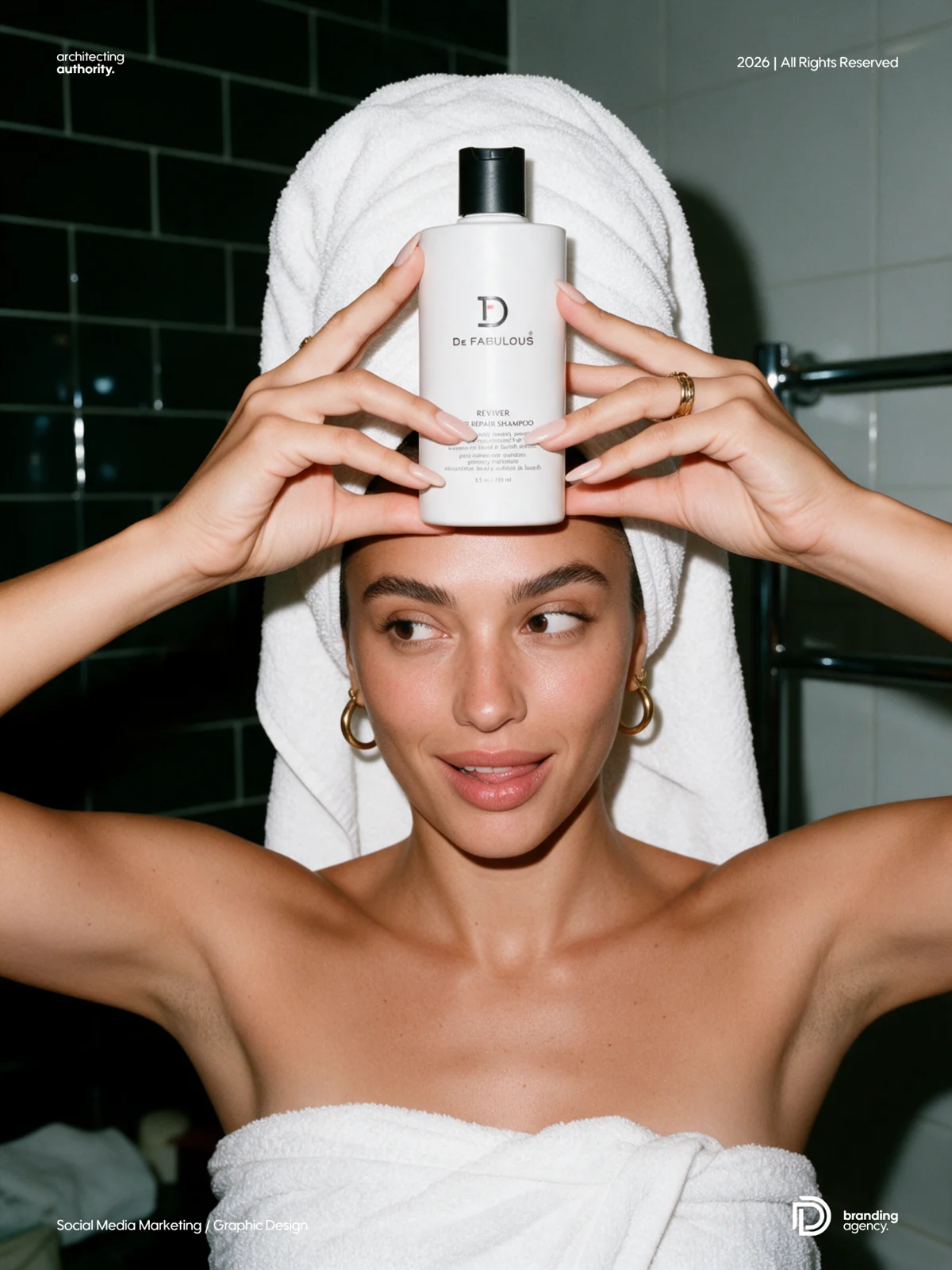
3. Bathroom towel portrait with direct flash
This direct-flash bathroom scene works as a candid beauty editorial. Preserve the towel texture and crisp flash shadows while keeping the replacement label readable.
Output aspect ratio: 4:5 · References: Image 1 for the scene; Image 2 for your product.
Copy the complete prompt below, including the final exclusions:
Create a photorealistic editorial beauty photograph using Image 1 as the visual reference. Replace the lavender package above the model’s head with my product from Image 2. Preserve the model’s appearance, expression, pose, hand gestures, towels, bathroom setting, and direct-flash photography style. Vertical 4:5 composition.
Match the camera position and framing: a straight-on upper-body portrait with the model centered, both arms lifted outward, elbows bent, and both hands holding the product above her forehead.
Keep the face fully visible beneath the product and preserve the reference’s close, spontaneous snapshot feeling.
Maintain the model’s warm olive-tan complexion, facial proportions, defined cheekbones, thick dark eyebrows, almond-shaped eyes, straight nose, and full lips. Reproduce the exact playful expression: her face nearly forward, eyes looking toward the viewer’s left, lips parted, and the tip of her tongue subtly visible against the lower lip. Preserve the slight asymmetry of the mouth, relaxed eyelids, natural lip lines, and small facial creases.
Keep realistic skin across the face, chest, shoulders, arms, and hands: fine pores, subtle peach fuzz, faint skin irregularities, natural underarm folds, soft tonal variation, and believable flash highlights.
Maintain warm blush and understated makeup. Avoid skin smoothing, excessive gloss, artificial sharpening, or perfectly uniform texture.
Her hair is wrapped inside a thick white terrycloth towel. Match the towel’s tall folded shape above the crown and the loose sections hanging beside her head. Preserve the white bath towel wrapped securely across her chest, including its uneven folded edge, fluffy loops, small wrinkles, and fabric shadows. Retain the gold hoop earrings and visible gold rings in their reference positions.
Reproduce the hand placement carefully. The hand on the viewer’s left reaches toward the product’s upper-left edge, with the index finger following the top edge and the thumb and other fingers naturally curved around it. The hand on the viewer’s right supports the opposite edge with a delicate fingertip grip. Match the wrist angles, finger overlaps, joint bends, spacing, and long almond-shaped nude nails. Preserve fine knuckle creases, cuticle texture, and realistic contact pressure. Adapt only the grip width necessary for the replacement product’s true dimensions.
Use my product’s exact silhouette, proportions, packaging structure, color, material, closure, logo, label layout, and typography. Position its main label toward the camera, readable and naturally integrated into the photograph. Preserve its true aspect ratio; do not stretch it into the original wide package or copy the original lavender color and branding. Add accurate finger-contact shadows and reflections consistent with the flash.
Recreate the bathroom: glossy dark green-black rectangular tiles on the left, pale gray tiles on the right, visible grout lines, a chrome towel rail on the right, and folded towels in the lower-left background.
Use direct on-camera flash with crisp shadows behind the subject, bright localized highlights, darker background corners, subtle green-toned shadows, and fine film grain. Keep the slightly imperfect, candid beauty-editorial finish.
No extra or fused fingers, distorted hands, floating product, warped packaging, invented label text, plastic skin, exposed hair, added captions, or watermarks.
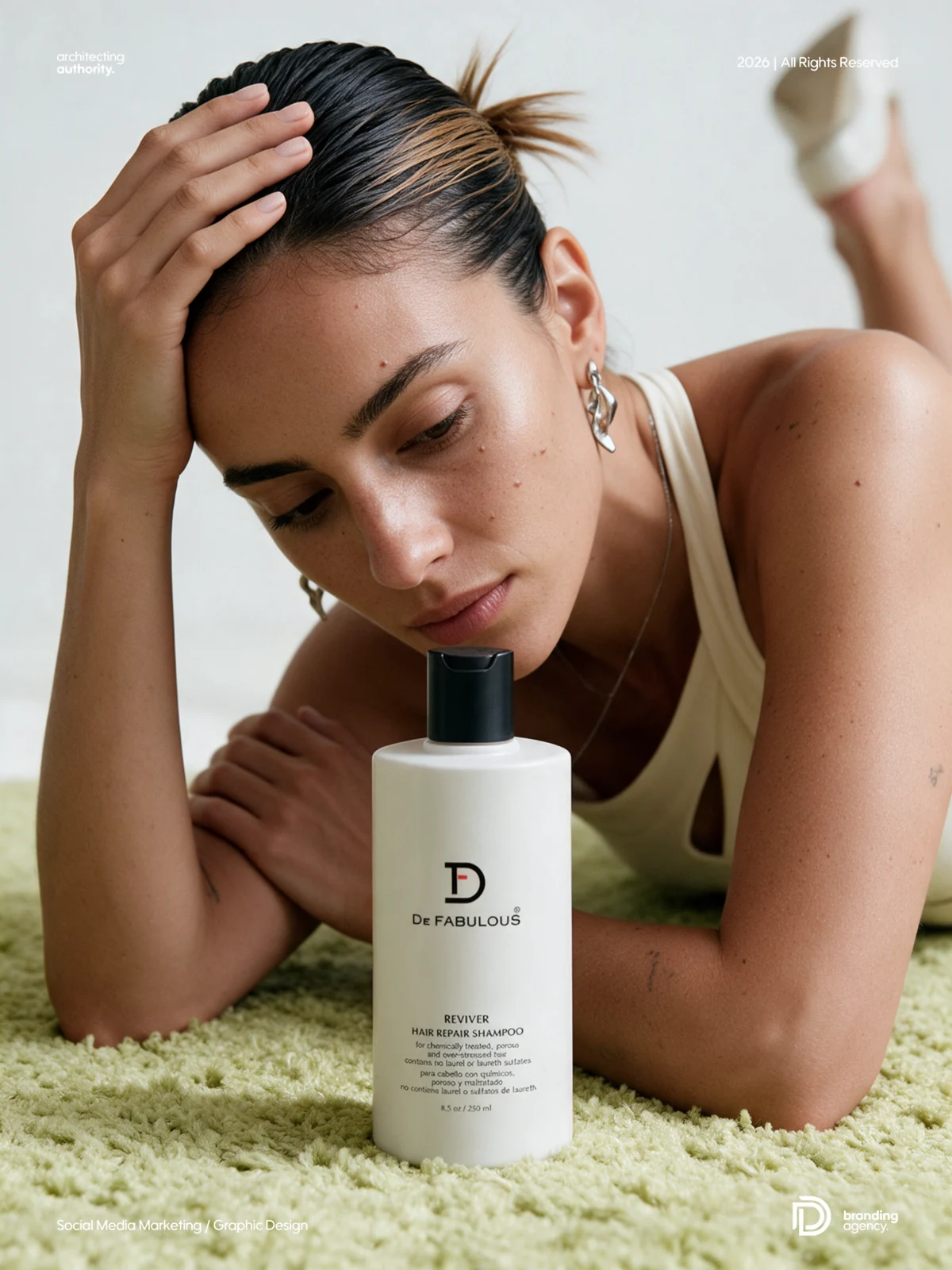
4. Floor portrait with products on green carpet
Make the product the foreground focal point in a relaxed skincare scene. The prompt supports either one hero product or a small range when you supply separate references for the companion items.
Output aspect ratio: 2:3 · References: Image 1 for the scene; Image 2 for your product.
Copy the complete prompt below, including the final exclusions:
Create a photorealistic editorial skincare campaign using Image 1 as the composition and model reference, replacing the foreground skincare packaging with my uploaded product(s). Preserve the relaxed floor pose, camera angle, facial expression, skin texture, hand placement, styling, and softly grainy photographic finish. Vertical 2:3 composition.
Position the camera low, close to carpet level, looking across the products toward the model. She lies on her stomach on a pale lime-green shag carpet, with her upper body angled diagonally through the frame. Her face occupies the upper-left area, her shoulders extend toward the right, and the products stand prominently in the lower foreground. Preserve the bent leg and softly focused white heeled shoe visible near the upper-right corner.
Match the model’s pose precisely: her head tilts downward toward the viewer’s left, one elbow rests on the carpet, and the raised hand lies over the top-left side of her head. The other forearm rests horizontally across the carpet behind the products, with its hand relaxed near the opposite upper arm. Keep the natural weight distribution, compressed skin at contact points, and relaxed shoulder position.
Preserve her calm, thoughtful expression, with lowered eyelids and eyes directed toward the foreground products. Her lips remain gently closed and relaxed. Match the facial proportions, strong dark eyebrows, nose, softly defined lips, cheek contours, and small visible facial marks. Avoid adding a smile or direct eye contact.
Maintain the warm tan skin tone and natural texture: visible pores, scattered subtle freckles, fine facial hair, delicate under-eye creases, soft blush, and realistic tonal variation across the forehead, cheeks, shoulders, arms, and hands. Keep the subtle sheen and fine photographic grain without smoothing the skin or exaggerating pore detail.
Reproduce the slicked-back dark-rooted hair with lighter brown ends gathered into a small tied-up section. Preserve the combed strands, visible hairline, short loose ends, and fine flyaways. Match the cream asymmetric strappy top, sculptural silver dangling earrings, and thin silver necklace resting naturally around the neck.
Preserve the hand resting on the hair: fingers gently spread, slightly bent joints, natural nail beds, short nude nails, and subtle pressure against the scalp. Match the resting hand’s overlapping fingers and relaxed wrist. Retain the visible small tattoo markings in their original positions without adding new ones. Hands must remain anatomically correct and separate from the products.
Place my main product upright in the central foreground, matching the reference’s visual prominence. Preserve its exact shape, proportions, closure, material, colors, logo, typography, and label layout. Keep the branding facing the camera and sharply readable. If companion product references are supplied, arrange them in the original left and right positions. If only one product is supplied, feature it centrally and omit the side containers.
Use realistic carpet contact shadows and small fibers touching the product bases. Preserve the pale neutral background, soft frontal illumination, gentle shadows, warm muted colors, and tactile film-like texture. Keep the hero product crisp and the model clearly detailed, with only the distant background and raised foot softly receding.
No plastic skin, excessive retouching, extra fingers or limbs, warped jewelry, floating products, distorted labels, invented packaging, added text, or watermarks.
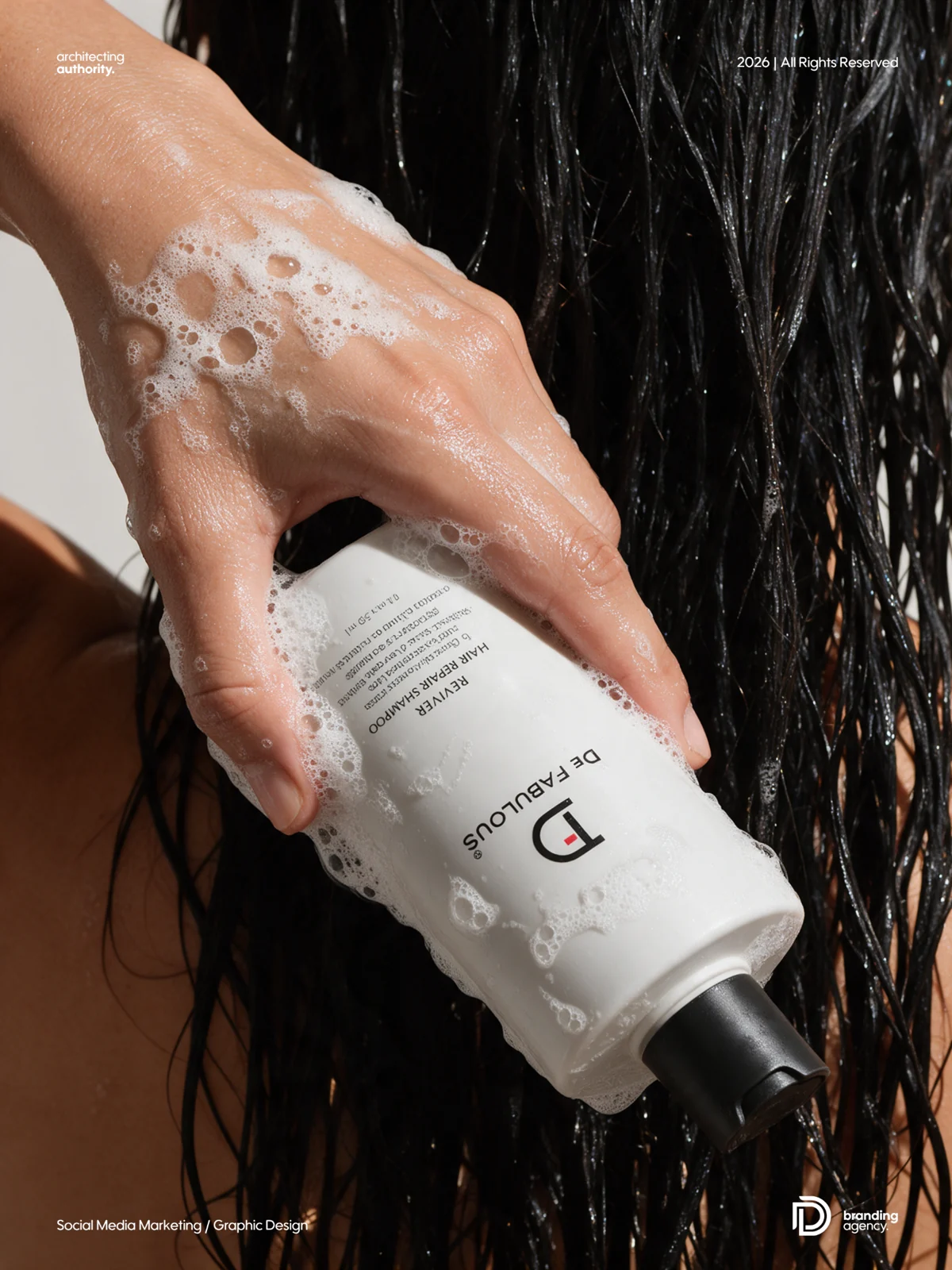
5. Wet hair and hand with foamy product
Use a tight, face-free crop to emphasise the product in use. Lather, water droplets and wet hair add tactile detail, but leave a clear area over the essential branding.
Output aspect ratio: 2:3 · References: Image 1 for the scene; Image 2 for your product.
Copy the complete prompt below, including the final exclusions:
Create a photorealistic close-up beauty campaign photograph using Image 1 as the composition reference. Replace the orange shampoo bottle with my exact product from Image 2. Preserve the camera angle, hand grip, wet skin, hanging wet hair, soap bubbles, lighting, and intimate crop.
Vertical 2:3 composition.
Match the tight framing: a wet hand enters from the upper-left edge and holds the product diagonally across the center, with its upper end toward the upper-left and its closure pointing toward the lower-right. Long, dark, soaking-wet hair fills most of the background and the right side.
A cropped section of the model’s warm tan shoulder and upper body appears on the left. Keep the face outside the frame.
Preserve the reference’s hand position and grip. Show the back of the hand facing the camera, the thumb bracing the viewer-left side of the packaging, and the fingers curving over and around its opposite side. Maintain the wrist angle, natural finger spacing, joint bends, partial finger occlusion, and contact pressure against the product. Adapt the grip only enough to accommodate my product’s actual dimensions. Keep visible nails natural and understated, matching the reference’s visibility rather than exposing hidden fingertips.
Render authentic wet skin: fine pores, subtle wrinkles across the knuckles, delicate creases between fingers, natural skin-color variation, and localized glossy reflections from water. Include small droplets and thin water films following the hand’s contours. Preserve realistic texture beneath the lather without making the skin waxy, overly smooth, or excessively sharpened.
Recreate the white soap lather across the back of the hand, between the fingers, and around portions of the product. Use varied bubble sizes, tiny translucent bubbles, denser white patches, thin watery edges, and irregular gaps revealing the skin and packaging underneath. The foam must cling naturally to surfaces and gather around contact points. Keep the main logo and essential product wording visible through a clear area in the lather.
Preserve the long, dark wet hair as uneven strands and narrow clumps hanging vertically behind the product. Include individual loose strands, small gaps, water-darkened texture, and fine reflective highlights. Some strands may sit behind the hand and bottle, maintaining believable depth.
Reproduce my product’s exact silhouette, proportions, material, color, closure, logo, typography, and label artwork. Rotate the entire product into the reference’s diagonal, closure-down position while keeping its label correctly attached to the packaging. Preserve its original closure design rather than copying the reference’s silver cap. Keep the product fully within the frame, prominent and sharply detailed.
Use warm directional light from the upper-left, with bright reflections on wet skin and bubbles, soft-edged shadows beneath the fingers, and rich dark detail in the hair. Retain the small areas of warm neutral background visible around the subject. The result should feel like a real close-up shower-care campaign photograph.
No visible face, extra fingers, fused joints, floating foam, artificial hair, stretched packaging, warped branding, invented label text, added captions, or watermarks.
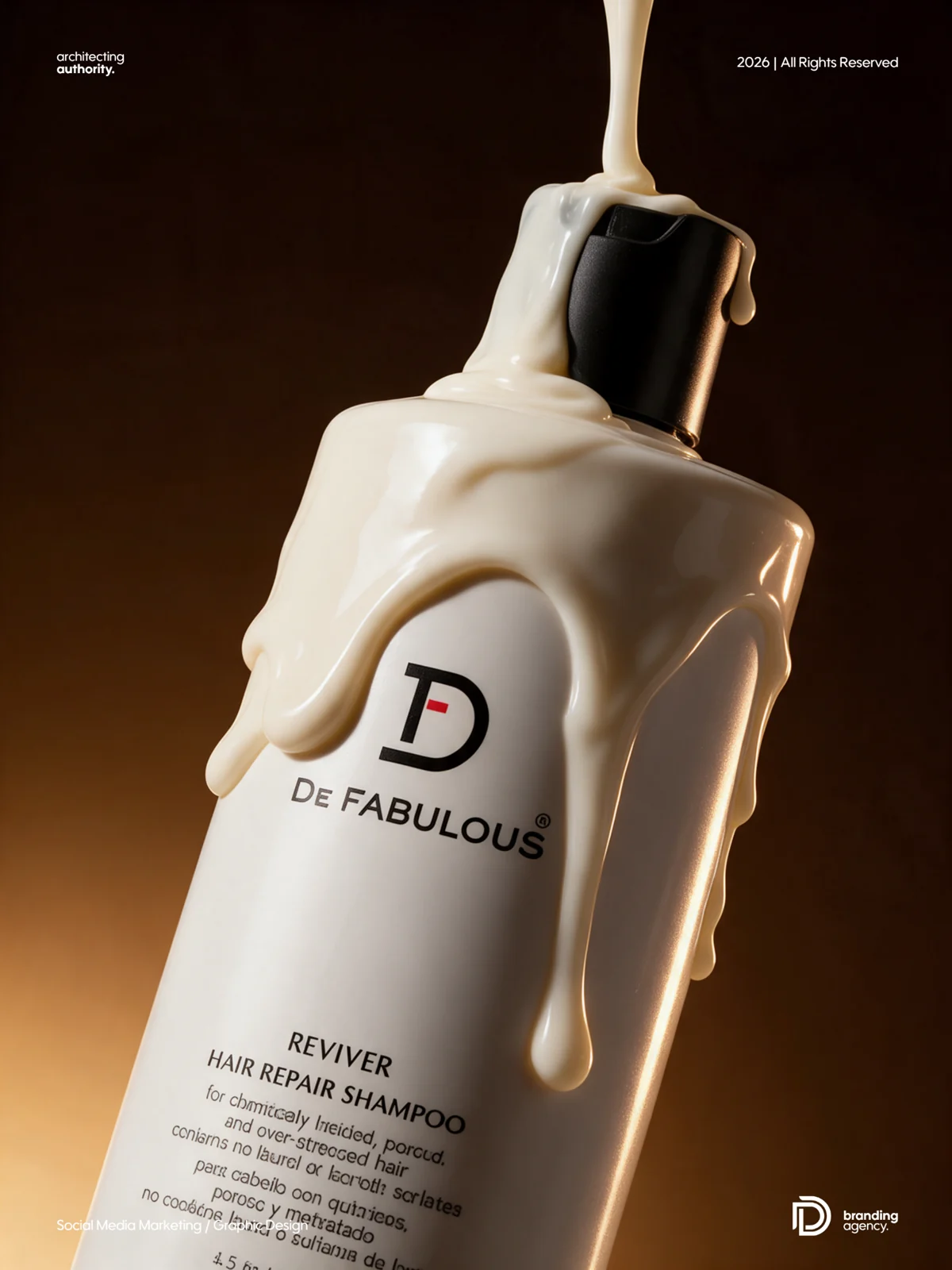
6. Cream pour over a diagonal product
Create a dramatic product-led image with a controlled cream pour. The liquid should follow the actual packaging shape, with believable drips and an open area around the main label.
Output aspect ratio: 4:5 · References: Image 1 for the scene; Image 2 for your product.
Copy the complete prompt below, including the final exclusions:
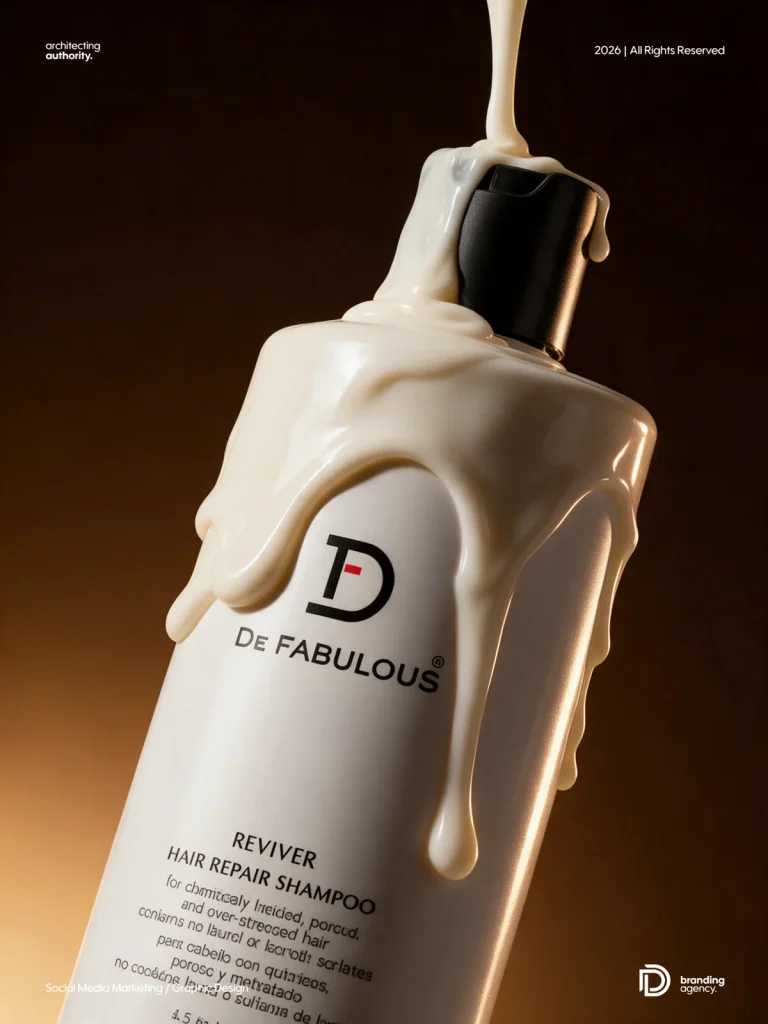
Create a photorealistic luxury product advertisement using Image 1 as the reference for composition, camera angle, lighting, liquid movement, and background. Replace the original bottle with my exact product from Image 2. Vertical 4:5 composition.
Match the dramatic close-up framing: the product fills most of the image, its long axis running diagonally from the lower-left toward the upper-right, tilted approximately 25 degrees clockwise from vertical. Use a slightly low front three-quarter camera angle, showing the front label and part of the right side. Let the lower portion extend beyond the bottom edge as in the reference, while keeping the main branding visible. Preserve the replacement product’s true proportions without stretching or reshaping it.
Reproduce the thick ivory-white cream pouring into the frame from above. The narrow stream lands around the product’s upper closure and flows over its shoulders, forming a glossy, rounded coating. Create an irregular opening in the cream that reveals the central front label.
Match the distinctive liquid shapes: a broad, rounded flow down the upper-left front surface; a longer, narrower drip descending along the front-right side and ending in a heavy rounded droplet; and a delicate trailing strand along the outer-right contour. Include a small suspended droplet at the dispenser tip or closure edge, according to the actual packaging structure.
Make the cream physically convincing: smooth viscous folds, realistic surface tension, thicker pools around edges, tapered connecting strands, and droplets that remain attached at their upper ends.
Include soft ivory shading, bright curved highlights, subtle translucency at thin edges, and contact shadows where the cream meets the packaging. Freeze the liquid mid-flow without motion blur.
Avoid foam, bubbles, watery splashes, or disconnected floating blobs.
Preserve my product’s exact silhouette, material, color, cap or dispenser, logo, typography, label spacing, and printed artwork. Keep its original closure design; do not add the reference’s black pump if my product has a different closure. Allow the liquid to follow the replacement packaging’s actual contours. Keep the logo and key product name readable, with reflections and cream positioned around essential text.
Use a seamless background graduating from deep chocolate brown at the top to a warm caramel-gold glow toward the lower-left. Light the scene with a broad warm key light from the upper-left, creating smooth highlights on the cream and packaging. Add a narrow golden rim light along the product’s right edge, with deep, controlled shadows that emphasize its volume.
Keep the front label and main cream drips sharply detailed, with the background smoothly out of focus. Preserve realistic surface texture and photographic reflections for a polished beauty-campaign finish.
No hands, people, extra products, added props, invented branding, distorted lettering, altered packaging proportions, extra dispensers, captions, or watermarks.
7. Floating product framed by flowing hair
Frame a single bottle with an open sweep of hair for a graphic campaign visual. Strand detail, natural overlap and space around the label keep the composition clear.
Output aspect ratio: 2:3 · References: Image 1 for the scene; Image 2 for your product.
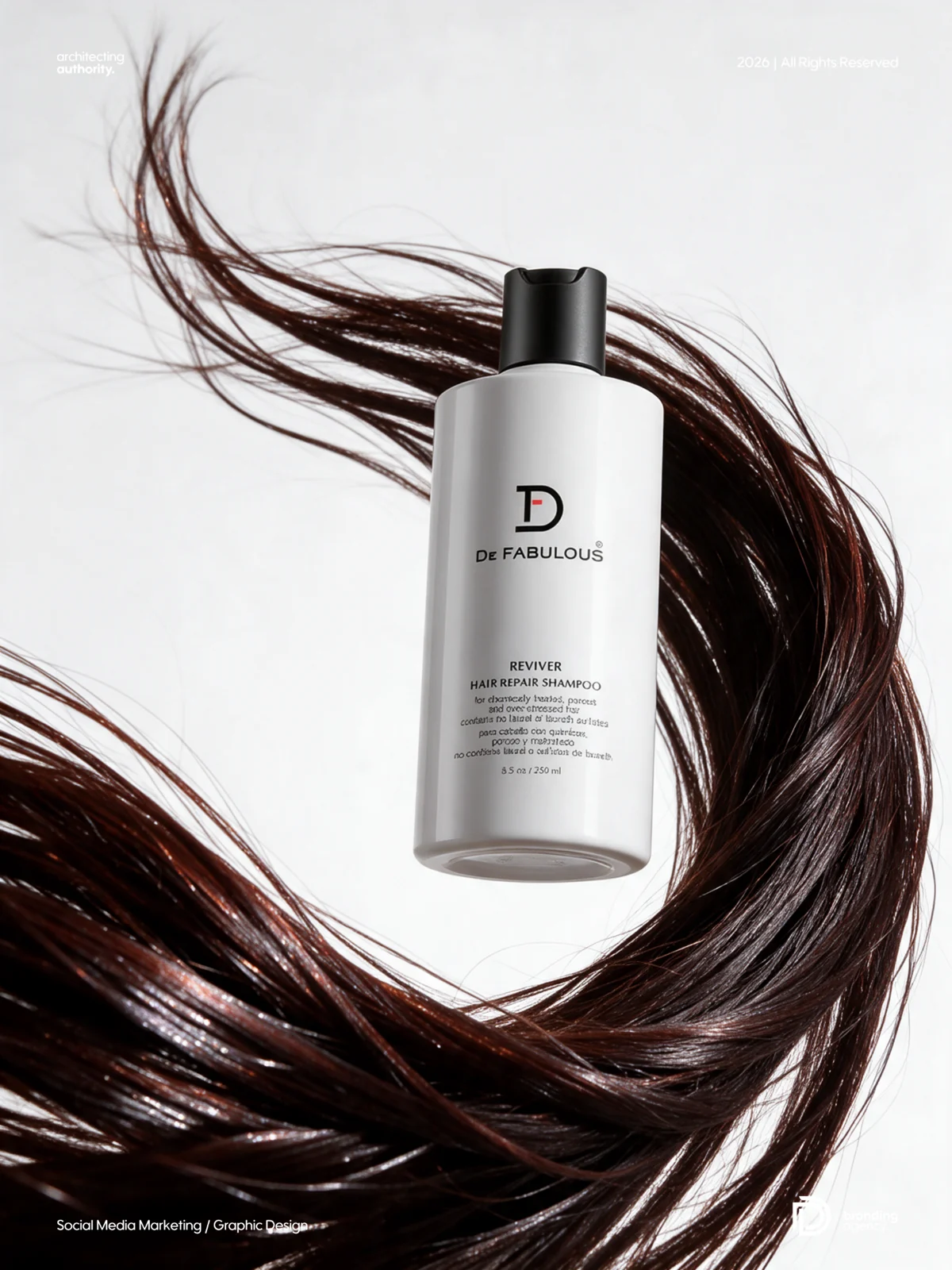
Copy the complete prompt below, including the final exclusions:
Create a photorealistic premium haircare advertisement using Image 1 as the reference for composition, camera angle, hair movement, lighting, and background. Replace the central bottle with my exact product from Image 2. Vertical 2:3 composition.
Position one product upright near the center, suspended in mid-air, with its front label facing the camera. Match the slightly low camera angle, revealing a small amount of the underside of the base.
Keep the entire product visible, with generous empty space above it and natural separation between the packaging and surrounding hair.
Recreate the sweeping arrangement of long, dark chestnut-brown hair. A thick section enters from the lower-left, flows across the bottom foreground, and curves upward along the right side. It then sweeps behind the product, with finer strands extending toward the upper-left. Form a broad, open loop around the product, preserving the reference’s flowing silhouette and asymmetry. Keep the front label unobstructed.
Render the hair with exceptional photographic detail: thousands of individual strands, varying strand thickness, subtle reddish-brown highlights, darker inner layers, fine flyaways, and softly separated ends. Preserve the natural twisting and overlap of broad hair sections in the lower foreground. Include narrow directional highlights following the hair’s curvature, with darker shadows between overlapping locks. The hair should appear smooth and healthy while retaining realistic irregularities, avoiding a solid ribbon, plastic surface, or perfectly uniform strands.
Preserve my product’s exact shape, proportions, packaging color, material, closure, nozzle or cap, logo, typography, and label layout. Do not copy the original bottle’s amber color or spray mechanism unless those features belong to my uploaded product. Keep all supplied branding correctly aligned to the packaging, with readable text and realistic perspective. Maintain the product’s true dimensions without widening or elongating it.
Use a clean off-white to very pale gray seamless background. Apply bright directional studio lighting from the upper-left and front, creating soft highlights on the packaging and crisp, fine reflections along the hair. Add gentle edge illumination to separate the dark strands from the background.
Preserve subtle translucency only where appropriate to the product’s actual material.
Keep the product and main hair sections sharply detailed, with delicate strand separation and natural depth. The composition should feel like a carefully photographed haircare campaign, with the product floating inside the open curve of the hair.
No visible person, scalp, hands, extra products, supporting wires, stands, tangled knots, artificial braids, warped packaging, invented label text, added captions, or watermarks.
8. Product held behind the back with wet hair
A close rear portrait gives this direction a quiet, minimal feel. Focus on natural skin texture, a supported hand grip and wet hair that rests against the product without passing through it.
Output aspect ratio: 3:4 · References: Image 1 for the scene; Image 2 for your product.
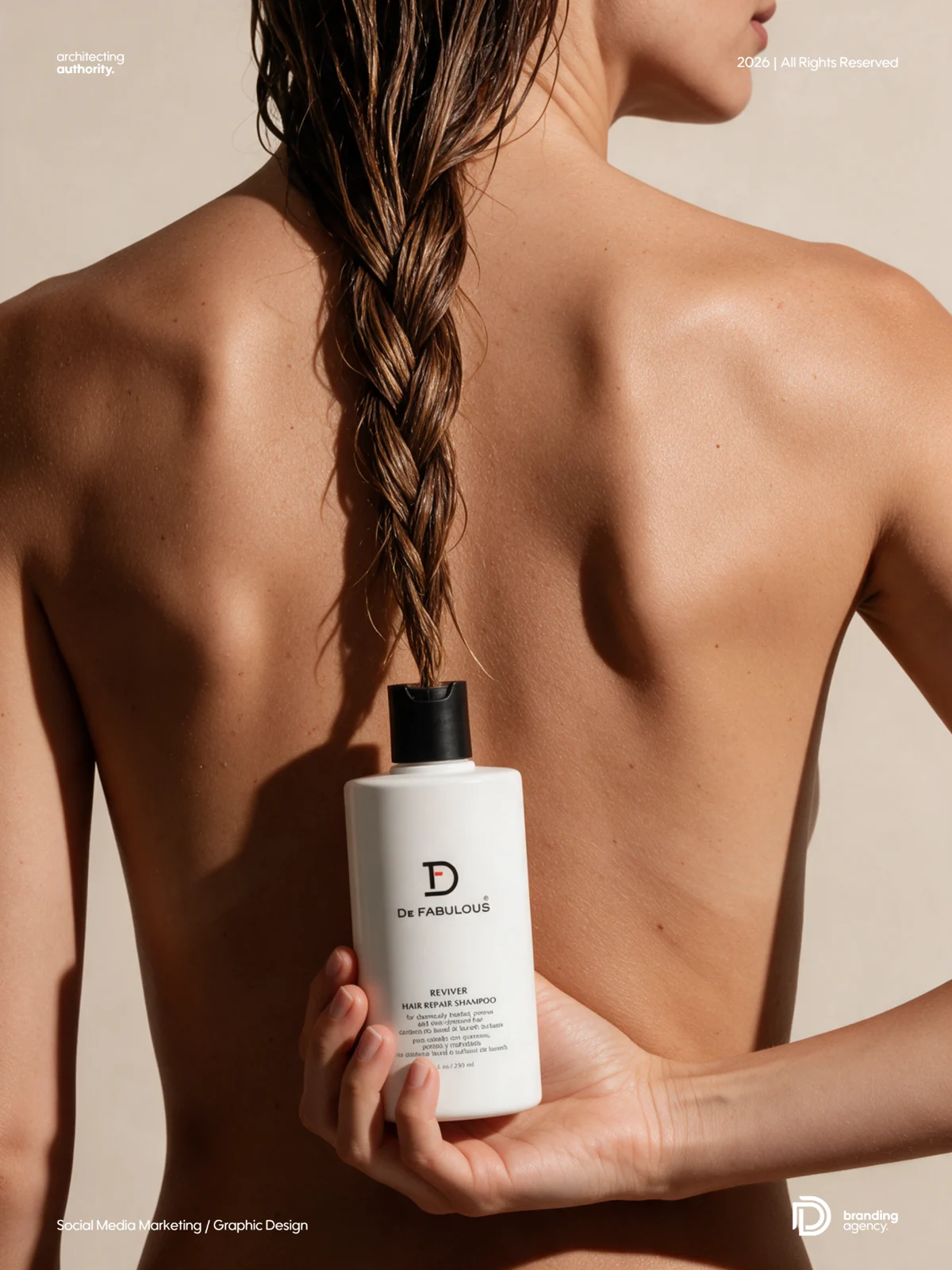
Copy the complete prompt below, including the final exclusions:
Create a photorealistic premium haircare campaign photograph using Image 1 as the reference.
Replace the green hair-mask container with my exact product from Image 2. Preserve the rear camera angle, body position, wet twisted hair, hand placement, skin texture, lighting, and warm neutral background. Vertical 3:4 composition.
Match the close three-quarter rear view of an adult woman, cropped from the back of her head to her waist. Her bare upper back fills most of the frame, with her head turned slightly toward the viewer’s right. Only a small portion of her jaw, lips, and side profile appears in the upper-right corner. Preserve the natural shoulder-blade contours, spinal line, neck folds, and relaxed posture.
Maintain her warm golden-tan skin tone and authentic texture: fine pores, tiny skin irregularities, subtle body hair, delicate creases, and natural color variation. Reproduce the soft sheen across the shoulders and upper back, with highlights following the body’s contours. Avoid airbrushing, waxy skin, exaggerated muscles, or excessive wetness.
Recreate the long, wet brown hair gathered into one narrow, rope-like twist descending down the center of her back. Preserve the tightly grouped strands, darker inner sections, warm highlights, fine loose hairs, and progressively thinner tip. This is twisted wet hair, not a woven braid. Let the tapered end reach and lightly rest against the top of the replacement product without passing through its lid or packaging.
Match the arm and hand position precisely: one forearm extends from the right edge across the lower back, with the wrist bent naturally and the palm supporting the product from underneath.
The fingers curl upward around the viewer-left side and lower front edge. Preserve the reference’s finger spacing, overlaps, joint bends, short natural pale-pink nails, cuticle detail, and fine palm and wrist creases. Keep the grip relaxed but physically supportive, with realistic skin compression and contact shadows.
Position my product against the lower back, slightly left of center, with its front label facing the camera. Preserve its exact shape, proportions, closure, material, color, logo, typography, and artwork. Scale it proportionally to occupy a similar area to the original container, adjusting finger curvature only as needed for a believable grip. Keep essential branding visible between the fingers.
Do not reshape the product into the reference’s rounded green jar.
Use warm directional light from the upper-left, creating broad highlights over the left shoulder and center back, gentle anatomical shadows, and a deeper shadow cast by the product toward the right.
Match the soft beige seamless background and warm photographic color palette.
Keep the skin, wet hair strands, fingers, and product label clearly detailed. Preserve the quiet, minimal beauty-editorial mood.
No extra fingers, distorted wrists, plastic skin, artificial hair, hair penetrating the packaging, warped labels, invented branding, added jewelry, extra products, captions, or watermarks.
9. Product on a counter in warm light
For a restrained product still life, use warm light, a simple counter and shallow depth of field. Preserve enough front fill for readable packaging without losing the rich background shadows.
Output aspect ratio: 4:5 · References: Image 1 for the scene; Image 2 for your product.
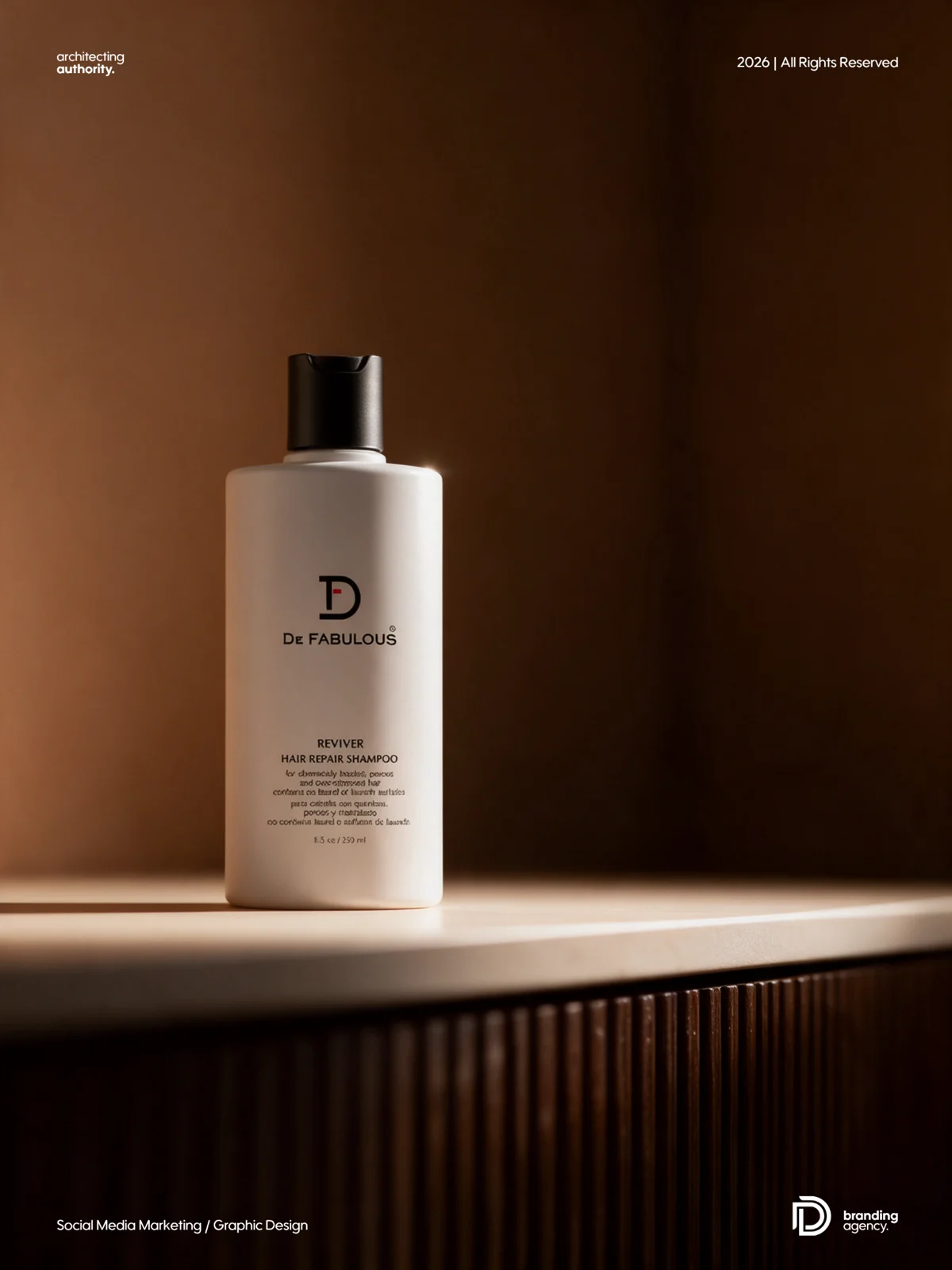
Copy the complete prompt below, including the final exclusions:
Create a photorealistic luxury product photograph using Image 1 as the reference for composition, camera angle, lighting, depth of field, and warm interior styling. Replace the original dropper bottle with my exact product from Image 2. Vertical 4:5 composition.
Position one product upright on a pale warm-beige countertop, slightly left of center. Keep it moderately sized within the frame, occupying roughly one-third of the image height, with substantial empty space above it. Match the reference’s low viewpoint near countertop level, with the product label facing the camera.
Preserve the layered composition: the product sits in the middle distance, the countertop’s softly blurred front edge crosses the lower-middle frame, and a dark warm-brown cabinet fills the foreground beneath it. Include the cabinet’s fine vertical ribbed texture, softly receding into blur.
The countertop should extend toward the right with the same subtle diagonal perspective as the reference.
Use a plain caramel-brown wall in the background, with a gentle transition between lighter warm areas and deep brown shadows. Keep the setting minimal, quiet, and uncluttered.
Reproduce my product’s exact silhouette, proportions, packaging material, color, closure, logo, typography, label placement, and printed artwork. Maintain its true shape and scale without stretching. Do not copy the original bottle’s black dropper, transparent glass, amber liquid, or beige label unless those features belong to my uploaded product.
Render materials accurately. For transparent packaging, show believable glass thickness, refraction, liquid level, and restrained internal reflections. For opaque packaging, preserve its actual matte, satin, or glossy finish. Keep the product grounded with a natural contact shadow on the countertop.
Match the warm directional lighting, with a narrow highlight along the upper-right edge of the product and gentle illumination across its front label. Use subtle frontal fill to preserve readable branding while retaining rich shadows. Let the surrounding cabinet and wall fall into warm, subdued tones. Avoid flat lighting or excessive orange color shifts on the packaging.
Use a shallow depth of field focused precisely on the product and its main label. Keep the background smoothly blurred and the nearest countertop edge and cabinet visibly softer. Preserve the gradual optical transition between sharp and blurred areas, with natural lens bokeh.
The final image should feel like an understated luxury skincare photograph captured in a sunlit interior: warm, tactile, cinematic, and believable.
No hands, people, additional products, decorative props, floating packaging, distorted perspective, artificial glow, warped lettering, invented branding, added captions, or watermarks.
Final checklist for a believable beauty campaign
- Packaging: the silhouette, cap, dispenser and relative dimensions match the real product.
- Branding: the logo, product name and visible label text remain accurate and readable.
- Hands: fingers have natural joints, separate edges and believable pressure against the product.
- Materials: hair has individual strands; skin keeps natural texture; foam and cream follow the surfaces they touch.
- Lighting: highlights and shadows agree across the model, packaging and environment.
- Composition: the requested crop, product scale and empty space still suit the intended placement.
Start with the direction that suits your product: an expressive portrait for personality, a close-up for texture or a still life for packaging detail. Keep one approved product reference throughout the series and make focused corrections between generations.
Questions, answered.
What images do I need for these prompts?
Use the matching scene reference as Image 1 and a clear photograph of your replacement product as Image 2. The green-carpet scene can also use separate references for companion products.
Can I use these prompts for a different bottle, jar or tube?
Yes. Keep the exact shape, proportions and closure of your own product. Adjust the grip, scale or liquid flow only enough to fit that packaging naturally into the scene.
Will the AI reproduce my label perfectly?
It may not. Compare every output with the original label and check the spelling, logo, spacing and packaging geometry. Correct those details before using the image.
Which aspect ratio should I choose?
Use the ratio printed beside the selected prompt: 1:1, 3:4, 4:5 or 2:3. The example images show visual direction and may have a different display crop.
What should I do if I only have one product for the floor scene?
Keep the main product upright in the central foreground and omit the side containers. Only include companion products when you supply their references.
How can I make skin and hair look more natural?
Retain the prompt instructions for pores, tonal variation, flyaways and individual strands. Check the output for excessive smoothing, repeated hair patterns and artificial sharpening, then refine those areas.
Found your next idea?
Explore prompt packs